





The month of Dhul Hijjah is one of the most sacred months in the Islamic calendar, but many of us may not realise just how important the first ten days of this blessed month truly are.
And unlike Ramadan - where we often feel mentally, emotionally and spiritually prepared before the month even begins - the first ten days of Dhul Hijjah can sometimes catch us by surprise.
Yet these days are among the most beloved days to Allah.
The Prophet ﷺ said:
“There are no days in which righteous deeds are more beloved to Allah than these ten days.” (Sahih al-Bukhari)
This hadith alone should make us pause and reflect. These are not ordinary days. They are not simply the days leading up to Eid, nor are they only significant for those performing Hajj.
They are days of worship, sacrifice, remembrance and return - a sacred opportunity to reconnect with Allah in a way that feels sincere, practical and deeply personal.
So the question is: Are you ready for it?
Are you ready to revive the goals you made after Ramadan? Are you ready to return to the Qur’an, reconnect with your salah, increase in dhikr, give more sincerely and ask Allah for what your hearts have been carrying?
And how can you make the most of Dhul Hijjah, especially when life already feels busy, full and overwhelming?
Let’s begin with understanding why these days matter so much.
What Is Dhul Hijjah?
Dhul Hijjah is the twelfth and final month of the Islamic calendar. It is the month in which Hajj takes place and includes some of the most significant days in Islam, including the first ten days, the Day of Arafah, Eid al-Adha and Qurbani.
It is also one of the sacred months mentioned in the Qur’an. Allah says:
“Indeed, the number of months with Allah is twelve months… of these, four are sacred.” (Qur’an 9:36)
In many ways, Dhul Hijjah feels like another gift after Ramadan. Another chance to return back to Allah, not with guilt over what we have failed to maintain, but with hope that we can begin again.
Why Are the First 10 Days of Dhul Hijjah So Important?
The first ten days of Dhul Hijjah are considered among the best days of the entire year for worship and righteous deeds.
They’re special because many major acts of worship come together within them. Hajj takes place. Muslims increase in fasting, charity, dhikr and dua. The Day of Arafah arrives. Qurbani is performed. Eid al-Adha is celebrated.
Ibn Hajar (a distinguished scholar of hadith) said:
“All of the good deeds are combined in these ten days and that is not the case for any other ten days of the year.”
By this he was referring to how ALL five pillars of Islam are emphasised during these ten days, which cannot be said about any other days of the year.
This means that without a doubt, these sacred days of Dhul Hijjah are the most blessed and important days of the entire year - more so than even the days of Ramadan!
And perhaps that is why Dhul Hijjah is such a powerful opportunity for self-reflection. Ramadan often teaches us discipline, restraint and renewal. Dhul Hijjah, on the other hand, brings our attention to sacrifice, surrender, obedience and trust in Allah.
It asks us to look honestly at our lives and consider what we are holding onto. What has distracted us since Ramadan? Which unwanted habits have quietly returned? Which good deeds did we intend to continue but slowly left behind?
This is not a time to feel discouraged. It is time to recalibrate. The beauty of sacred seasons is that they remind us we are not expected to be perfect. We are simply being invited back.
Dhul Hijjah, Hajj and the Invitation for Every Muslim
Dhul Hijjah is deeply connected to Hajj - the journey of a lifetime.
Hajj is a journey of surrender. It strips away comfort, status and distraction, and gathers Muslims from every corner of the world in a powerful display of unity, humility and devotion to Allah.
It also carries the legacy of Prophet Ibrahim AS and his family - a legacy built on trust, sacrifice, obedience and complete reliance upon Allah.
But even if we are not performing Hajj this year, we are not excluded from the blessings of Dhul Hijjah.
You may not be standing on the plains of Arafah or walking between Safa and Marwa. You may not be making tawaf around the Ka‘bah. You may simply be at home, working, caring for children, managing family responsibilities, dealing with health struggles, or trying to hold yourself together in a season of life that feels heavy.
And yet, Dhul Hijjah is still for you.
Allah tells us in the Qur’an:
“And take provisions, but indeed, the best provision is taqwa.” (Qur’an 2:197)
Although this verse is mentioned in the context of Hajj, it carries a reminder for all of us. Every journey back to Allah requires provision, and the most important provision is taqwa - God-consciousness.
So even if we are not physically travelling for Hajj, these days can still become a spiritual journey. A journey back to prayer, back to remembrance, back to sincerity, and back to the version of ourselves we were trying to become after Ramadan.
10 Things to Do During Dhul Hijjah

You do not need to do everything perfectly to honour these days.
The aim is not to create an unrealistic worship routine that leaves you feeling overwhelmed by day three. The aim is to choose sincere, meaningful acts that bring you closer to Allah and help you make the most of this blessed time.
Here are ten simple but powerful ways to benefit from the first ten days of Dhul Hijjah.
1. Revive Your Intentions and Goals
Many of us leave Ramadan with beautiful intentions. We plan to pray with more focus, read more Qur’an, give more charity, control our tongue, and become more consistent in our worship.
But then life returns to normal. Work gets busy. Family responsibilities increase. The school run begins again. The routines that felt so natural in Ramadan suddenly feel harder to maintain.
Dhul Hijjah gives us a much-needed opportunity to pause and reflect.
Ask yourself: what did I hope to carry forward after Ramadan? Where did I lose momentum? What is one small act of worship I can revive during these ten days?
Perhaps you wanted to pray Fajr on time, but late nights made it difficult. Perhaps you wanted to read the Qur'an daily, but didn’t create a realistic routine. Perhaps you intended to give charity regularly, but forgot to set up a system that made it easy.
This is the perfect time to revisit those intentions and make them practical.
Instead of trying to change everything at once, choose one thing and begin there. Sometimes the most powerful spiritual change begins with one honest intention and one small step taken consistently.
2. Reconnect With Your Salah
Salah is one of the greatest ways to reconnect with Allah, and Dhul Hijjah is the perfect time to return to it with more presence and care.
Allah says:
“Establish prayer for My remembrance.” (Qur’an 20:14)
This verse reminds us that salah is not just an obligation to complete. It is a meeting with Allah. It is the moment we step away from the noise of the world and return to the One who knows us better than we know ourselves.
During these ten days, try to be more mindful of your prayers. Slow down your recitation. Remove distractions where you can. Give yourself a few moments before salah to breathe, gather your thoughts and remember who you are standing before.
And if you are struggling to pray five times a day, let Dhul Hijjah be your starting point. Begin with what you can and build from there. Make the intention to pray each salah on time for these ten days (and beyond), and ask Allah to make it beloved to you.
Once the heart begins to taste the peace of returning to prayer, it becomes easier to keep going.
3. Increase Your Dhikr
One of the simplest, yet most powerful acts of worship during Dhul Hijjah is dhikr - the remembrance of Allah.
The Prophet ﷺ said:
“There are no days greater in the sight of Allah and in which righteous deeds are more beloved to Him than these ten days, so increase in them your Tahleel, Takbeer and Tahmeed.” (Musnad Ahmad)
This includes saying:
La ilaha illAllah
SubhanAllah
Alhamdulillah
Allahu Akbar
What makes dhikr so beautiful is that it can be done almost anywhere. You can remember Allah whilst cooking, driving, walking, folding laundry, commuting to work or sitting quietly between tasks.
Sometimes we assume worship has to happen in long, uninterrupted blocks of time. But for many women, especially those juggling work, family, children and emotional responsibilities, the day can feel fragmented. Dhikr allows us to bring remembrance into the small spaces of ordinary life.
This is also why reminders matter so much.
A single word said with intention can bring the heart back when it starts to drift. These are not just words; they are anchors.
4. Fast During the First 9 Days, Especially the Day of Arafah
Fasting is not just limited to the Day of Arafat; you can fast any (or all) of the 9 days of Dhul Hijjah.
The Prophet ﷺ was asked about fasting on the Day of Arafah and said:
“It expiates the sins of the previous year and the coming year.” (Sahih Muslim)
This is an incredible mercy from Allah.
If you are able to fast all nine days, that is a wonderful act of worship. If that feels difficult, try your best not to miss the Day of Arafah. And if you are unable to fast due to health, pregnancy, breastfeeding, menstruation or any other valid reason, do not think that you are cut off from the blessings of Dhul Hijjah.
There are many other ways to worship Allah during these days - The door to Him is never closed.
5. Make More Dua, Especially on the Day of Arafah
Dua is one of the most personal and intimate acts of worship.
It is the moment you turn to Allah with your hopes, fears, needs, regrets and dreams. You don’t need perfect words either, you simply need to come to Allah with sincerity.
Allah says:
“And when My servants ask you concerning Me, indeed I am near. I respond to the invocation of the supplicant when he calls upon Me.” (Qur’an 2:186)
During Dhul Hijjah, and especially on the Day of Arafah, make sure to make time for dua. Write your dua list beforehand and include everything that matters to you:
Ask Allah for your faith, your family, your children, your healing, your rizq, your akhirah, your parents, your marriage, your future, your business, your heart and the Ummah.
Ask Allah to guide you, forgive you, strengthen you and make you beloved to Him.
Ask for the things that feel too big and the things that feel too small.
And remember, dua is not only about asking for outcomes. It is also about building a relationship with Allah, where your first instinct becomes to turn to Him before anyone else. Making dua is a powerful act of worship itself.
6. Give Charity, Even If It’s Small
Charity purifies our wealth, softens our hearts and reminds us that what we have was given to us by Allah in the first place.
Allah says:
“The example of those who spend their wealth in the way of Allah is like a seed which grows seven spikes; in each spike is a hundred grains.” (Qur’an 2:261)
This image is so powerful because it reminds us that Allah can multiply what seems small in ways we cannot imagine.
A few pounds given sincerely. A meal sent to someone in need. A gift to someone struggling. Even helping another person with your time, energy or kindness can become a form of charity.
During the first ten days of Dhul Hijjah, try to give something each day, even if it is small. The amount you give does not matter as much as the sincerity behind it does.
Sometimes we delay charity because we feel we cannot give much, but a small deed done sincerely in a blessed time may carry far more weight than we realise.
7. Read, Recite or Listen to More Qur’an
Dhul Hijjah is the perfect time to reconnect with the Qur’an.
For some of us, that may mean reciting more each day. For others, it may mean reading the translation, listening to Qur’an during a commute, reflecting on one ayah, or playing Qur’an in the home while going about daily tasks.
The aim is not to rush through pages simply to tick something off. The aim is to return to the words of Allah with presence.
If you have struggled to maintain a connection with the Qur’an after Ramadan, use these days to gently begin again. Start small, but start with sincerity.
8. Understand the Nature of Sacrifice
Dhul Hijjah is inseparable from the idea of sacrifice.
We remember Prophet Ibrahim AS, his obedience to Allah and his willingness to give up what was most beloved to him. We also remember that true sacrifice is not only about the outward action, but about the state of the heart.
Allah says about Qurbani:
“Their meat will not reach Allah, nor will their blood, but what reaches Him is piety from you.” (Qur’an 22:37)
This verse is a powerful reminder that Allah is not in need of our sacrifice. Rather, it is we who need the act of sacrifice to purify us, humble us and bring us closer to Him.
So during these days, it is worth asking yourself: what can I give up for the sake of Allah?
It may be time spent on social media. It may be a habit that pulls you away from salah. It may be gossip, anger, comparison, resentment or the need to control everything. It may even be the comfort of staying exactly as you are.
Sacrifice is not always dramatic. Sometimes it looks like choosing silence over an argument, prayer over sleep, gratitude over complaint, or trust over fear.
And often, the very thing we give up for Allah becomes the thing that frees us.
9. Revive the Takbeer and Bring Worship Into the Home
Ramadan often feels different because we make it different. We prepare for it, speak about it, decorate for it, plan our meals and shape our routines around it. Dhul Hijjah deserves to be felt too.
One way to do this is by reviving the Takbeer:
Allahu Akbar, Allahu Akbar, la ilaha illAllah. Allahu Akbar, Allahu Akbar, wa lillahil hamd.
Say it after salah. Say it while cooking. Say it with your children. The important thing is to say it out loud.
Children especially learn through atmosphere. When they hear the Takbeer, see us giving charity, watch us prepare for Qurbani and listen to the story of Prophet Ibrahim AS, they begin to understand that these days are special.
Our homes do not need to be perfect to be filled with remembrance. They simply need hearts inside them that are trying to remember Allah.
10. Choose One Habit to Carry Beyond Dhul Hijjah
The true success of Dhul Hijjah is not only what we do during the first ten days, but what remains with us afterwards.
The Prophet ﷺ said:
“The most beloved deeds to Allah are those that are done consistently, even if they are few.” (Sahih al-Bukhari)
This hadith is deeply reassuring because it reminds us that our faith is not built through occasional bursts of intensity alone. It is built through small, sincere actions that we return to again and again.
Before Dhul Hijjah ends, choose one habit that you want to carry forward.
It could be praying one salah on time every day, reading one page of Qur’an, giving charity weekly, making morning or evening adhkar, saying Alhamdulillah more consciously, or making dua before sleeping.
Choose something realistic enough to continue and meaningful enough to shape you.
Because sometimes the greatest transformation does not come from doing everything. It comes from doing just one thing sincerely and consistently; one thing that becomes part of the fabric of who you are.
The Day of Arafah: A Day Not to Waste

The Day of Arafah falls on the ninth day of Dhul Hijjah and is one of the most significant days of the year.
For those performing Hajj, it is the day of standing at Arafah. For those not performing Hajj, it is a day of fasting, dua, dhikr, repentance and hope.
This is not a day to miss.
The Prophet ﷺ taught that there is no day on which Allah frees more of His servants from the Hellfire than the Day of Arafah. In this narration, Allah draws near, praises His servants to the angels, and says:
“What do these servants want?” (Sahih Muslim 1348)
Just pause on that for a moment.
On this day, while millions of pilgrims stand before Allah in humility and need, we are reminded of His immense mercy, generosity and nearness. It is a day to ask, to seek forgiveness, to return, and to believe that no dua is too big for Allah to answer.
If you are able to fast, make the intention and prepare for it. If possible, reduce distractions and create some space in your day for worship.
And if your day is busy, do what you can within your circumstances. Make dua while cooking, driving, working, feeding your children or walking between tasks. Allah knows the life you are carrying, and He knows the sincerity behind every small effort.
The Day of Arafah is a day to come to Allah with neediness and hope. Do not hold back in asking Him.
Eid al-Adha: More Than a Celebration
Eid al-Adha is a celebration, but it is also a reminder.
It reminds us of obedience, sacrifice, gratitude and trust in Allah. It reminds us of the legacy of Prophet Ibrahim AS and his complete submission to Allah. It reminds us that the things we love most in this world are still entrusted to us by Him.
So as we prepare for Eid - the outfits, the food, the gifts, the gatherings - we should also prepare our hearts.
Eid is not only about outward beauty. It is about gratitude. It is about remembering Allah in our joy, sharing what we have, honouring our families and keeping the meaning of sacrifice alive.
This is where meaningful gifting becomes so beautiful.
A gift does not need to be extravagant to matter. Sometimes the most thoughtful gift is one that carries a reminder. A word someone needs. A message that strengthens them. A piece they can wear close and remember Allah through.
Final Thoughts: Don’t Let These Days Pass Unnoticed
Dhul Hijjah is not just another date in the Islamic calendar. It is one of those rare opportunities Allah SWT gives us to pause, reflect and begin again.
These days remind us that even if we have drifted after Ramadan, we can still return. Even if our worship has weakened, we can still revive it. Even if our hearts feel distracted, we can still remember Allah SWT and ask Him to bring us closer.
So do not wait for the perfect moment to begin. Do not wait until your routine is calm, your home is quiet or your heart feels completely ready. Start with what you have.
May Allah SWT allow us to make the most of Dhul Hijjah, accept our worship, forgive our shortcomings and bring us closer to Him through these blessed days. Ameen.
FAQs About Dhul Hijjah
Why is Dhul Hijjah important?
Dhul Hijjah is important because it is one of the sacred months in Islam and includes the first ten blessed days, Hajj, the Day of Arafah, Eid al-Adha and Qurbani. The Prophet ﷺ taught that righteous deeds in the first ten days of Dhul Hijjah are more beloved to Allah SWT than deeds done on other days.
What should I do during the first 10 days of Dhul Hijjah?
During the first ten days of Dhul Hijjah, increase in salah, dhikr, fasting, dua, charity, Qur’an, Takbeer, repentance and reflection on sacrifice. You can also prepare for Qurbani and make the Day of Arafah a focused day of worship.
Can I benefit from Dhul Hijjah if I’m not going to Hajj?
Yes. Even if you are not performing Hajj, you can still benefit from Dhul Hijjah through doing all the other acts of worship mentioned: fasting, dhikr, charity, dua, Qur’an, sincere repentance and good deeds.
Should I fast during Dhul Hijjah?
It is recommended to fast during the first nine days of Dhul Hijjah if you are able, especially the Day of Arafah. The tenth day is Eid al-Adha and is not a fasting day.
What is special about the Day of Arafah?
The Day of Arafah is the ninth day of Dhul Hijjah. For those not performing Hajj, fasting on this day carries immense reward, as the Prophet SAW said it expiates the sins of the previous year and the coming year.
What is Qurbani?
Qurbani is the sacrifice performed during Eid al-Adha, commemorating the obedience and sacrifice of Prophet Ibrahim AS. By doing a qurbani we are fulfilling a sacred sunnah of Ibrahim AS and showing our own obedience towards our Creator. The Qur’an reminds us that it is not the meat or blood that reaches Allah SWT, but our piety.
Powerful Reminders To Help You Reconnect

The heart forgets, and that is why reminders matter.
We can begin the day with the best of intentions, but life quickly pulls us in different directions. Messages, errands, emotions, work, family, worries and distractions all compete for our attention. Before we know it, the day has passed and the remembrance we intended to hold onto has slipped into the background.
Sometimes, we need something small and beautiful to bring us back.
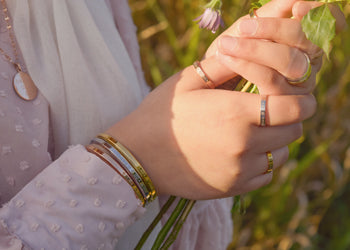
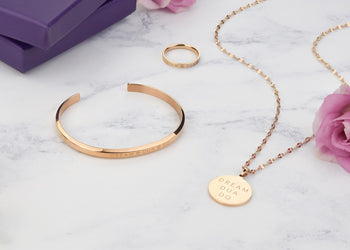
At Desert Rose, our pieces are created for the Muslim woman who wants her faith woven into everyday life. Our jewellery is designed to remind you of what your soul already knows.
This Dhul Hijjah, choose a reminder that helps you return to Allah throughout your day. Explore our spiritual wellness jewellery and Eid gifts - powerful reminders designed to help you feel more positive, uplifted and connected to your faith wherever life takes you.
And if you know anyone who is blessed to go on Hajj, we have specially created a beautiful HAJJ MUBARAK Tea Light Holder as the perfect gift for them when they come back!