







Introduction
Wearing Islamic jewellery, such as Ayatul Kursi necklace, Ayatul Kursi bracelet, 4 Qul necklace, and name of Allah necklace, has become increasingly popular among Muslims. However, many are unaware that wearing such items is considered forbidden in Islam. Scholars such as Shaykh Assim Al-Hakeem and others have emphasised that adorning oneself with Ayatul Kursi jewellery is totally prohibited due to several concerns rooted in Islamic teachings. In this article, we explore why wearing items inscribed with Quranic verses is problematic and why believers should reconsider this practice.
Ayatul Kursi Jewellery: Disrespect to the Words of Allah
One of the main reasons scholars prohibit wearing Ayatul Kursi jewellery is the risk of disrespecting the words of Allah. When a person wears an Ayatul Kursi necklace or any other form of Islamic jewellery, they are likely to enter places where taking or reciting the Quran would be inappropriate.

Think about it—would you take a Mushaf (physical copy of the Quran) into the bathroom? Would you recite Ayatul Kursi in a place where music is playing, such as a cafe or a concert? If not, then why would you wear the verses of the Quran in these same places?
Wearing such jewellery means that the sacred words of the Quran will be exposed to situations that are disrespectful. Whether it’s a public restroom, a place of entertainment, or other questionable environments, the presence of Quranic inscriptions in such locations diminishes the reverence due to Allah’s words.
Imitation of Other Religious Practices
Another important consideration is that wearing Quranic verses in the form of jewellery resembles the practices of Jews and Christians. Christians wear crosses as symbols of faith, while some Jewish communities hang religious scriptures around their necks (Mezuzah necklaces). Islam prohibits mimicking the religious practices of other faiths, particularly when it involves sacred symbols or texts.
Wearing an Ayatul Kursi bracelet or 4 Qul necklace may appear to be a form of devotion, but in reality, they resemble the religious ornaments worn by non-Muslims. Islam teaches that faith manifests through actions and worship, not physical symbols.
False Beliefs in Protection
A dangerous misconception that has arisen around Ayatul Kursi or 4 Qul jewellery is the belief that wearing it provides protection from harm. This belief is completely incorrect and contradicts the teachings of Islam.
Protection Comes from Allah Alone
As mentioned in authentic hadiths, reciting Ayatul Kursi and the 4 Qul is a powerful means of seeking protection. However, wearing jewellery with these verses does not grant any special protection. Believing that an object—rather than Allah—can protect a person falls into the category of shirk (associating partners with Allah).
Some individuals claim that they do not wear these items for protection but simply as a reminder of their faith. Even in this case, scholars caution against it because it still imitates those who believe in amulets and charms. Islam is clear on the matter: spiritual protection comes through supplication, recitation of the Quran, and placing one’s trust in Allah—not through objects.
Watch Sheikh Assim Al Hakeem’s brief explanation on why wearing such jewellery is not recommended below:
The Correct Way to Honour Ayatul Kursi and 4 Qul

Instead of wearing Ayatul Kursi or 4 Qul jewellery, Muslims should focus on correctly incorporating the teachings of these verses into their daily lives. Here are some practical alternatives:
1. Recite Daily
The Prophet (peace be upon him) taught that reciting Ayatul Kursi after each prayer provides divine protection. Memorise and recite it regularly, particularly after every salah, upon waking and before sleeping, to seek Allah’s safeguarding.
2. Engage with the Quran Properly
Rather than wearing a name of Allah necklace or Ayatul Kursi jewellery, invest in learning and understanding the Quran deeply. Study its meanings, reflect on its wisdom, and apply its teachings in daily life.
3. Teach Others the Importance of Ayatul Kursi
Share knowledge about the power and significance of Ayatul Kursi with family and friends. Encourage them to recite it and place their full trust in Allah’s protection rather than in material objects.
Our Stance as an Islamic Jewellery Brand
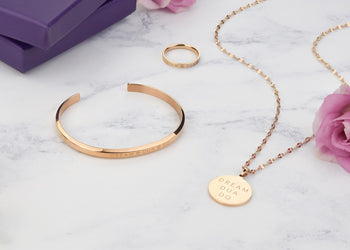
As an Islamic jewellery brand, we’ve been requested many times to create Ayatul Kursi, 4 Qul, and the name of Allah jewellery, but we stand firm against this practice. Instead, we’ve developed a beautiful range of faith-inspired jewellery that can be worn anywhere as it does not contain sacred verses of the Quran or the name of Allah. Instead, our pieces use powerful reminders that help strengthen faith while ensuring respect for Islamic teachings. Click the image below to explore our collection!

Conclusion: A Call to Reflection
While the intention behind wearing Ayatul Kursi jewellery may be rooted in love for the Quran, reflecting on whether such a practice aligns with Islamic teachings is essential.
Faith is demonstrated through actions, not through adornments. Protection comes from sincere dua, recitation, and trust in Allah—not from an Ayatul Kursi necklace or bracelet. By choosing to honour the Quran in the right way, we uphold the reverence and respect it truly deserves.
What are your thoughts on this topic? Let’s discuss this in the comments below!